A Brooklyn electrician handles everything from outlet replacements to full panel upgrades, but some calls cannot wait until morning. An electrical emergency poses immediate risk of fire or electric shock, and most residents face at least one in their lifetime. The problem is that many homeowners and tenants do not recognize the warning signs until the situation becomes dangerous. Old wiring hidden behind plaster walls, overloaded circuits in crowded apartments, and aging panels pushed beyond capacity can all escalate within minutes. In a borough where pre-war buildings line nearly every block, the stakes are especially high. This guide breaks down exactly what qualifies as an emergency, who to call first, and how a licensed electrical contractor can restore safety before further damage occurs. Whether you manage a residential property or run a commercial space, you will find clear, actionable steps here.
Key Takeaways
- An electrical emergency is any condition that poses an immediate risk of fire or electric shock, including burning smells, smoke from outlets or panels, sparking, and electrical shock incidents.
- Know who to call first depending on the situation: dial 911 for active fires or life-threatening danger, contact Con Edison for utility-side problems, and reach a licensed emergency electrician for internal wiring, panel, or circuit issues.
- The most common warning signs include repeated breaker trips, flickering lights paired with heat or odor, exposed wiring, partial power outages, and hot or buzzing panels.
- Brooklyn’s older building stock, including pre-war brownstones with knob-and-tube or cloth-wrapped wiring, carries elevated risk and warrants periodic inspections.
- Prevention is the most cost-effective strategy: schedule regular inspections, upgrade outdated panels, and avoid overloading circuits with extension cords or power strips.
Urgent vs. Routine: What Is Actually an Electrical Emergency?
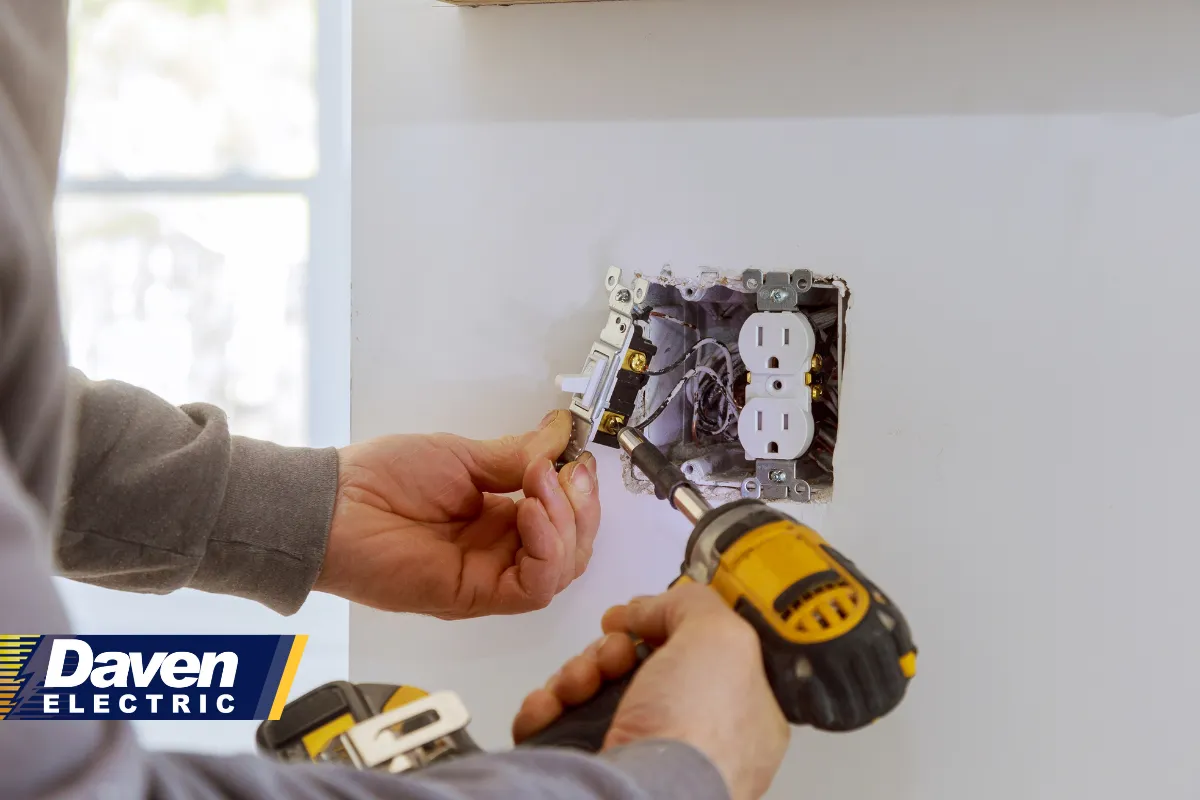
An electrical emergency is any situation where there is immediate danger to people, pets, or property due to a malfunction in the electrical system. This includes conditions that could lead to fire, shock, or the failure of life-sustaining equipment.
Here are the criteria that push a problem into emergency territory:
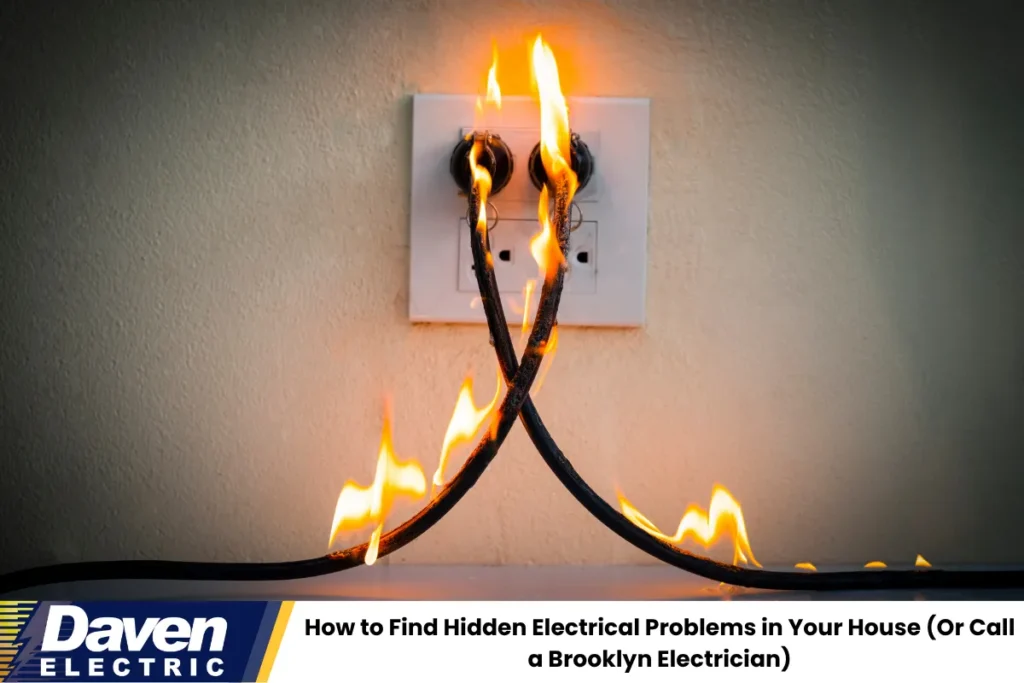
- Visible flames, thick smoke, or sparks coming from outlets, switches, or the breaker box
- A persistent burning smell originating from walls, wiring, or electrical components
- Someone receiving an electrical shock or tingling sensation from fixtures or appliances
- A buzzing, crackling, or sizzling electrical panel that is warm or hot to the touch
- Repeated circuit breaker trips, especially breakers that refuse to reset
- Partial power outages accompanied by any of the signs listed above
- Exposed wiring with missing or melted insulation
Immediate danger includes active electrical fires or serious shocks to people. These are never situations to monitor overnight.
Routine issues, by contrast, are inconveniences rather than threats. A single dead outlet with no smell or heat, a planned lighting upgrade, scheduled electrical installations, or adding a circuit for a new appliance all fall into the non-urgent category and can be handled by a residential electrician during normal business hours.
The rule is straightforward: if the situation threatens anyone’s safety or could damage the building, treat it as urgent. If it is only an inconvenience, schedule a service visit. When in doubt, shut off power at the main disconnect if it is safe to do so and call a licensed professional for guidance.
Who to Call First in a Brooklyn Electrical Emergency
Calling the right party quickly saves time and reduces danger. In New York, the chain of responsibility is clearly divided.
- Call 911 when there is any threat to life, an active fire, heavy smoke, or a downed power line. Call 911 for burning smells or visible sparks that could indicate an imminent fire. FDNY and EMS will respond to secure the scene.
- Contact Con Edison when the problem involves utility-side equipment: service wires, transformers, meters, or power lines on the street. Their emergency hotline handles issues up to and including the meter.
- Reach a licensed emergency electrician when the problem is inside the property. Everything past the meter, including the panel, breakers, wiring, outlets, and switches, falls under the property owner’s responsibility.
Typical Brooklyn scenarios play out like this:
- Downed power line on the sidewalk: call 911 and Con Edison immediately. Stay at least 30 feet away.
- Smoke pouring from an interior panel: evacuate everyone, call 911, then contact a local electrician once the fire department clears the scene.
- Burning odor from a wall outlet with heat coming from the plate: shut off the breaker for that circuit if safe, then make an emergency call to a qualified professional.
Apartment dwellers should also notify their super or building management, but never wait for permission before calling 911 or Con Edison. Maintain contact information for building management for infrastructure issues in apartments, but prioritize life safety above all.
Common Situations That Count as Electrical Emergencies in Brooklyn
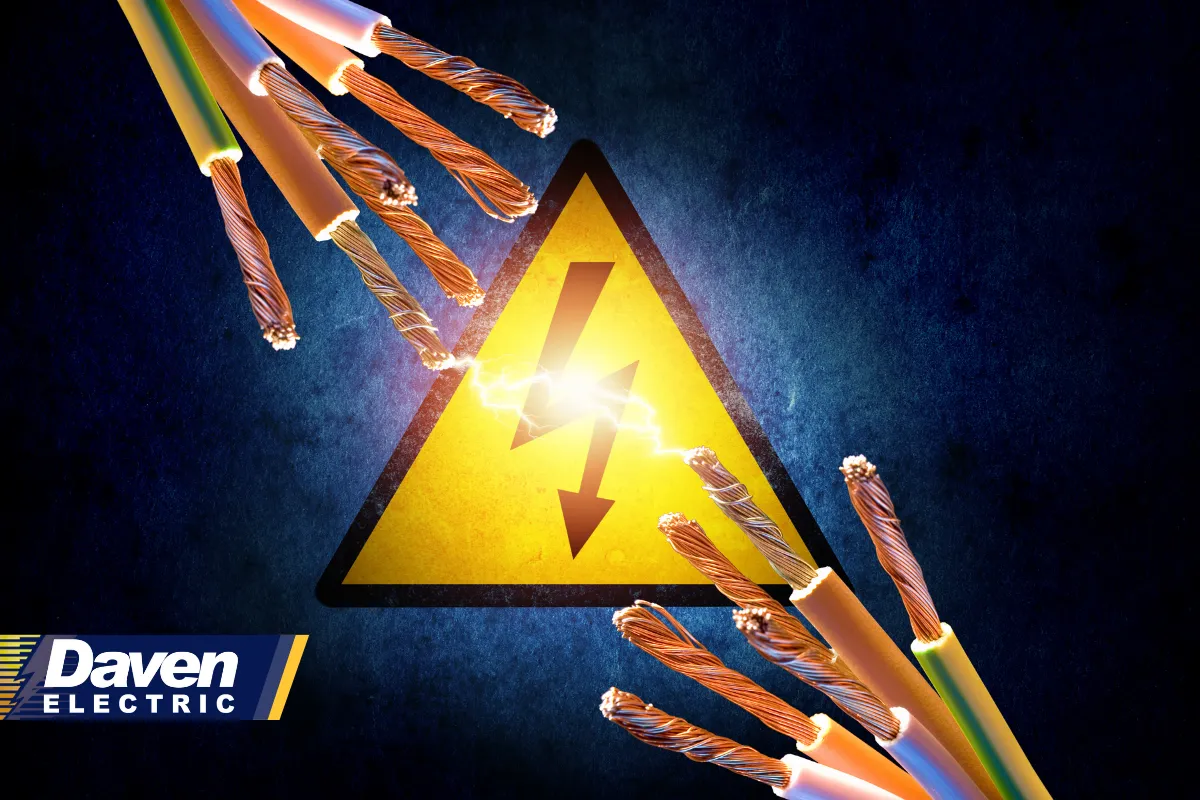
Not every flicker or dead outlet is cause for alarm, but several common conditions cross the line into genuine emergencies. Sparks or arcing from outlets require immediate professional attention, as do hot outlets or switches, which indicate dangerous internal resistance or overloading. Frequent circuit breaker trips signal larger electrical issues that a qualified professional needs to diagnose. Burnt outlets are often caused by electrical overloads and should never be ignored.
Here is what Brooklyn residents and businesses are most likely to encounter.
Power Outages, Flickering Lights, and Panel Red Flags
Power outages affecting only part of a home are emergencies. When your apartment or house loses power but neighbors still have theirs, the cause is almost certainly internal. Partial power outages indicate internal wiring issues that may involve the panel, the service entrance, or a specific circuit.
Constantly flickering lights may indicate faulty wiring, especially when the flickering is not tied to a large appliance cycling on. If lights dim or surge in one section of the building and the behavior is persistent, something is wrong upstream.
Panel warning signs demand particular caution:
- Buzzing or cracking sounds from electrical panels signify loose connections or arcing
- Warmth or heat radiating from the panel cover
- Visible rust, corrosion, or scorch marks on the breaker box
- A burning smell coming from inside the panel enclosure
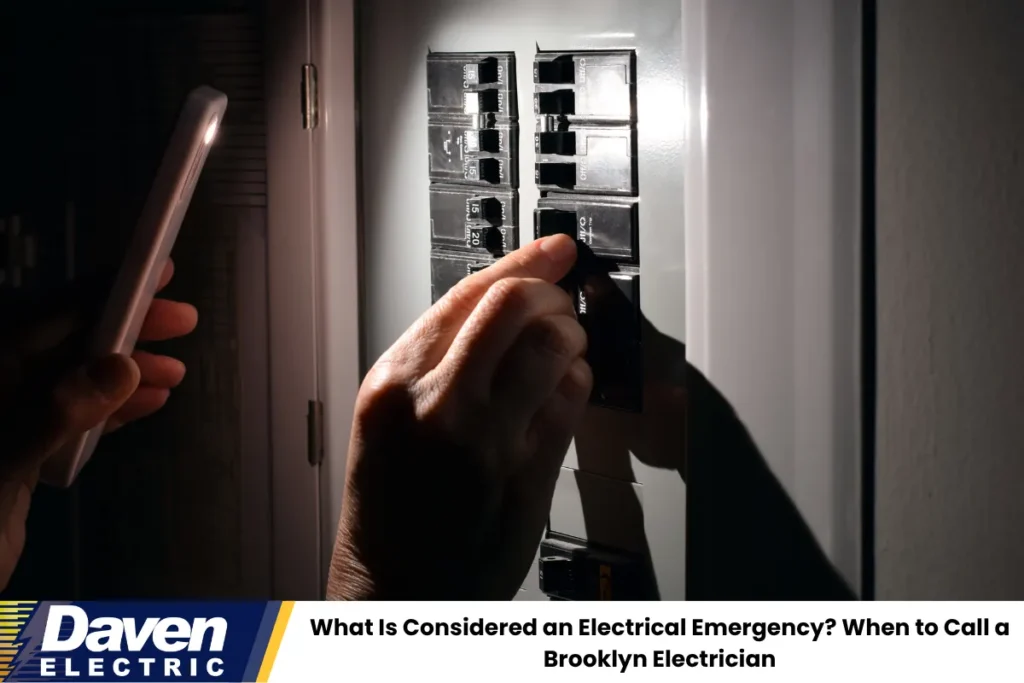
Do not open a hot, buzzing, or smoking electrical panel. Stay back, shut the main disconnect only if it is safe to reach, and contact a qualified electrician to respond immediately.
Burning Smells, Smoke, Sparks, and Electrical Fires
Burning smells or smoke indicate serious electrical emergencies. Any burning smell with no obvious kitchen or HVAC source should immediately prompt a check of nearby outlets, switches, and appliances. A burning smell from outlets signals potential electrical fires, often caused by overheated wiring or a loose connection behind the wall plate.
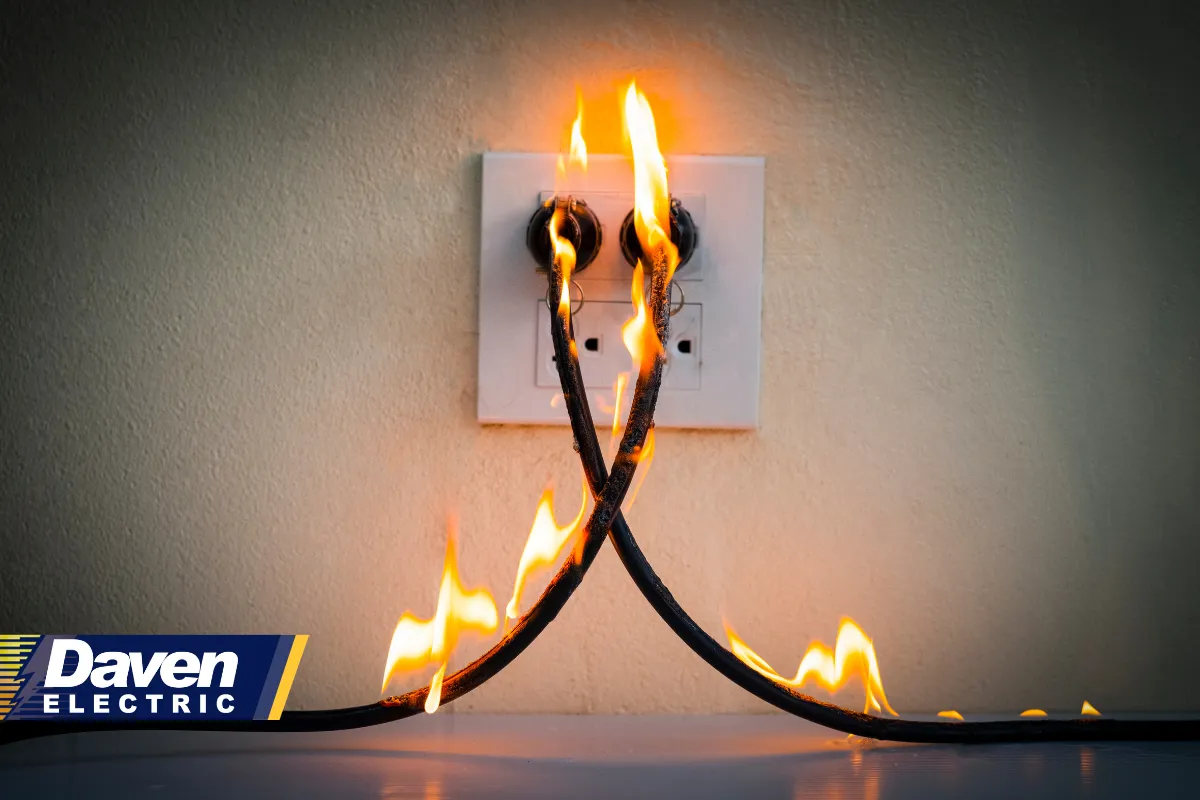
Smoke, scorch marks, or small sparks when plugging in devices point to insulation breakdown. Sparks or arcing from outlets indicate an electrical emergency that can ignite nearby materials in seconds. Burning smells near outlets signal serious electrical problems that will not resolve on their own.
If flames or heavy smoke become visible, the situation is now an active fire:
- Evacuate everyone immediately
- Call 911
- Do not attempt to extinguish an electrical fire with water; use a Class C or ABC extinguisher only if trained
- Do not use affected circuits or breathe in smoke from burning plastics
Electrical fires need immediate emergency services contact. After the fire department clears the scene, an emergency electrician must inspect and complete a full assessment of damaged components before anyone can safely restore power.
Electrical Shock, Tingling, and Exposed Wiring
Any electrical shock is a serious problem. Even a mild tingle from a metal faceplate, faucet, or handrail is a warning that something in the grounding system has failed. If experiencing electrical shocks, there is a grounding failure somewhere in the circuit that needs to be identified.
Common Brooklyn scenarios include tingling when touching a metal sink near a kitchen outlet, shocks from a stairwell railing in an older building, or zaps from a damaged extension cord.
First-response basics:
- Turn off power at the main breaker if safe to do so
- Never touch a person still in contact with a live conductor
- Call 911 for any significant shock, burn, or loss of consciousness
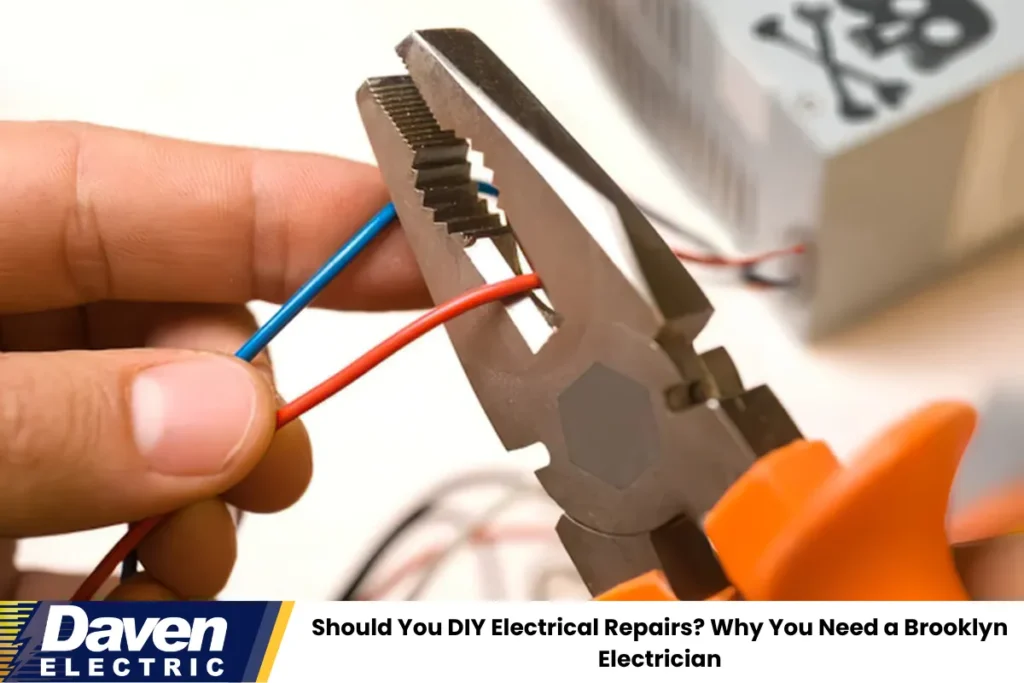
Exposed wiring poses immediate shock and fire risks. Hanging cables with missing insulation, chewed wires, or open junction boxes in basements and hallways are all hazards, especially where children or tenants pass through. Exposed wiring requires immediate attention from an electrician. Do not tape or temporarily fix exposed conductors. Block off the area and arrange for a licensed professional to complete the repair.
Homes, Apartments, and Businesses: How Electrical Emergencies Differ
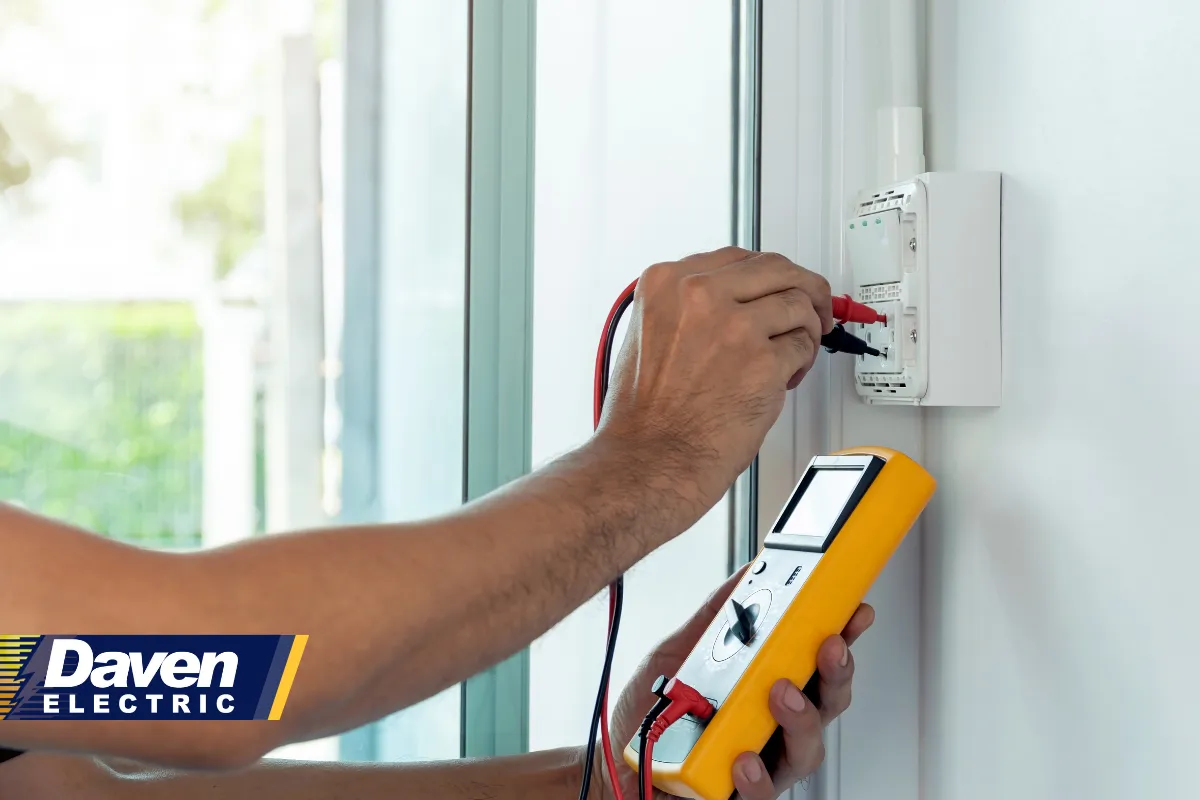
Electrical emergencies look different in a railroad apartment, a pre-war brownstone, and a commercial storefront, but they all share the same core risks: fire, shock, and power disruption.
In residential spaces, the priority is protecting families and pets along with essential systems like heat, refrigeration, and lighting. Older wiring common in Brooklyn housing stock adds an extra layer of risk.
In multi-unit buildings, shared risers, common-area panels, and interconnected electrical systems mean that one unit’s problem can affect the entire building. Tenants should notify management while still calling 911 or Con Edison when appropriate.
For commercial properties and businesses, additional concerns include data loss, safety of customers and staff, code compliance, and the financial costs of business interruption from extended power outages. Emergency lighting, life-safety circuits, and exit signs must remain powered per fire code.
Both homeowners and business owners should have a plan in place: know where the main shutoff is located, keep emergency numbers posted, and establish who is authorized to hire an emergency electrician.
Older Brooklyn Buildings and Pre-War Wiring Risks
Many Brooklyn properties built before 1940 still contain original knob-and-tube wiring, cloth-wrapped cable, or panels with limited capacity. Older wiring systems often cannot handle modern electrical loads from air conditioners, EV chargers, and multiple electronics running simultaneously.
According to national fire data, homes over 40 years old represent roughly 34 percent of housing units but account for more than half of electrical distribution system fires. In New York City alone, nine of the 29 fire-related deaths recorded in 2026 were attributed to electrical causes.
Warning signs specific to aging wiring include:
- Frequent blown fuses or tripped breakers under minimal load
- Brittle or crumbling insulation on visible wires
- Warm ceiling fixtures or outlet covers
- A burning smell when multiple appliances run on the same circuit
Property owners should schedule periodic inspections by a licensed electrician to identify potential faults before they lead to fires or shocks. Upgrading outdated panels, wiring, and receptacles reduces both the fire risk and the nuisance of constant tripping.
What to Do (and Not Do) During an Electrical Emergency
Clear actions in the first 60 to 90 seconds can dramatically improve safety when electrical emergencies happen. Here is a breakdown.
Do:
- Evacuate if there is smoke, fire, or any sign of active danger
- Shut off power at the main disconnect if the panel is safe to approach
- Keep everyone, including pets, away from water and metal near electrical sources
- Call 911 for fires or shock injuries, Con Edison for utility equipment, or a licensed electrician for internal issues
Do not:
- Touch someone still in contact with live electricity
- Reset breakers repeatedly without investigating the underlying issue
- Open a hot, buzzing, or sparking electrical panel
- Use water anywhere near energized equipment; water contact with electrical panels creates an electrocution hazard
DIY repairs, makeshift tape fixes, and running extension cords as permanent solutions all increase the chance that a minor problem becomes a severe emergency. Rely on professionals with the proper training and knowledge to diagnose and resolve the issue safely.
Once the immediate danger has passed, document visible damage with photos. These help electricians pinpoint the problem and support insurance claims.
Step-by-Step: Safe Immediate Actions Before Help Arrives
Follow this sequence when an electrical emergency occurs:
- Stay calm. Move people and pets away from the hazard.
- Determine if fire or injury is involved and place the appropriate emergency call.
- Shut off power at the main breaker using a dry hand while standing on a dry surface. Do not touch the panel if it is hot, humming loudly, or showing scorch marks.
- Unplug nearby electronics only if there is no smoke, sparks, or shock risk, to protect devices from further damage.
- Use flashlights rather than candles during nighttime outages to reduce fire risk in dark hallways.
- Wait for a licensed electrician to assess all damage before you attempt to restore power or reset any circuits.
How to Reduce the Chance of Future Electrical Emergencies
Prevention is far less expensive than emergency repairs and infinitely safer than waiting for a fire.
- Schedule regular electrical inspections, especially for buildings older than 30 to 40 years or properties that have added high-demand appliances and electronics over time.
- Upgrade overloaded or outdated panels to properly sized modern equipment with arc-fault and ground-fault protection where code requires it. New construction projects in Brooklyn must meet the 2025 NYC Electrical Code, which incorporates updated safety standards.
- Practice safe habits: avoid daisy-chaining power strips, overloading outlets, or running cords under rugs. Replace damaged cords and plugs promptly.
- Install GFCI protection in kitchens, bathrooms, basements, and outdoor circuits. Use surge protection for sensitive equipment in both residential and commercial settings.
- Keep working smoke and carbon monoxide alarms in every unit per NYC housing code. Early warning saves lives.
When to Schedule Non-Emergency Electrical Service
Not every issue justifies an emergency call. Some problems should trigger a scheduled visit within days or a few weeks.
Appropriate non-emergency reasons to contact an electrical contractor include:
- Loose outlets that still function but feel wobbly
- Upgrades to LED lighting or new construction wiring
- Adding circuits for large appliances
- Replacing an older but currently stable panel
Addressing these smaller concerns sooner reduces stress on the system and can prevent them from turning into true emergencies. Keep a running list of electrical annoyances, such as occasional breaker trips or intermittent buzzing, and discuss them during a planned inspection.
However, any sign of heat, smoke, or shock instantly moves an issue from normal maintenance into the emergency category. Never wait on those.
Brooklyn Electrician – Daven Electric Corp.
At Daven Electric Corp., we provide fast, reliable electrical service across Brooklyn and the surrounding areas. Our team handles everything from urgent panel repairs and emergency troubleshooting to scheduled upgrades and new circuit installations. We have deep experience working in Brooklyn’s unique building stock, from pre-war walk-ups with aging wiring to modern mixed-use properties requiring code-compliant solutions. When you need a dependable electrician who can respond quickly and get the job done right, we are the team to call. Whether you suspect an electrical emergency or want to schedule preventative maintenance to protect your home or business, reach out to us at (212) 390-1106 or fill out our contact form. Your safety is our priority, and we are ready to provide the professional assistance you need.
Frequently Asked Questions
Is it an electrical emergency if only one room loses power?
Losing power in a single room can be either minor or serious depending on the circumstances. Start by checking whether a GFCI outlet in that room or a nearby bathroom has tripped, as this is the most common and harmless cause. If a simple reset restores power and nothing else seems wrong, you likely do not need emergency assistance. However, if the breaker trips again shortly after resetting, or if you notice any warmth, odor, or discoloration at the panel, treat it as an emergency. Power loss to one room that recurs or is accompanied by other warning signs often points to a failing connection, damaged wiring, or an overloaded circuit that could overheat. Document when it happens and which appliances are running to help the electrician diagnose the problem efficiently.
How can I tell if my electrical panel is too old or unsafe?
Several signs suggest your panel may need professional evaluation. If your breakers trip frequently under normal load, the panel has no available spaces for additional circuits, or you notice rust, corrosion, or a metallic smell near the box, these are red flags. Panels that feel warm to the touch or produce any audible sound beyond a faint hum may have loose internal connections that could arc and ignite. Panels manufactured several decades ago often lack modern safety features like arc-fault protection. Never remove the panel cover or touch internal components yourself, as this work requires proper training and licensing. If you do not know the age or history of your panel, particularly after adding large appliances or completing renovation work, schedule an inspection. Upgrading an outdated panel is a long-term safety investment that also reduces the risk of costly emergency calls.
What should I have ready before calling an emergency electrician?
Having basic information prepared helps the electrician respond more efficiently. Know your exact address, the type of building you are in, and be ready to describe the problem clearly, including whether you have noticed any smell, smoke, shocks, or outages and when the issue started. Note whether your neighbors also lost power, as this helps determine whether the problem is on the utility side or inside your property. If you already contacted 911 or Con Edison, let the electrician know. Identify where your main breaker is located and whether power is currently on or off. Clear access to the panel, the affected rooms, and the basement if applicable. Keep pets safely restrained and away from the work area. Even if you cannot answer every question, calling promptly is more important than having a perfect description of the situation.
Are extension cords safe to use during an electrical emergency?
Extension cords are designed for temporary use and should never serve as a permanent wiring solution. Using multiple cords to bypass a tripped breaker or a damaged outlet is unsafe and can worsen an existing problem by adding heat and resistance to an already stressed circuit. If a cord feels warm, shows visible damage, or produces a burning smell, unplug it and replace it immediately. During a planned, short-term outage, a heavy-duty cord rated for the intended load can power essentials temporarily, but it should remain visible, untangled, and away from foot traffic or rugs. For any situation where you find yourself relying on extension cords regularly, contact a professional to add permanent outlets or circuits. This eliminates the ongoing fire risk and brings your system closer to current code requirements.
How often should Brooklyn homes and businesses schedule electrical inspections?
Most properties benefit from a professional inspection every three to five years. Buildings older than 40 years, high-demand commercial spaces, and any property that has undergone major renovation should be inspected more frequently. An inspection after any incident involving electrical shock, fire, or unusual panel behavior is also strongly recommended. A typical visit covers panel condition, wiring integrity, grounding, outlet and switch testing, and a review of code compliance. The goal is to catch worn insulation, loose connections, or overloaded circuits before they cause an emergency. Keeping inspection reports on file helps you plan upgrades and maintenance over time, turning reactive emergency costs into predictable, manageable investments in your property’s safety and value.
Disclaimer
Disclaimer: This article offers general electrical safety guidance for Brooklyn residents and property owners. It is not a substitute for individualized advice from a licensed electrician or directives from local emergency authorities. Always consult qualified professionals for your specific situation.