Do You Really Need a Brooklyn Electrician for LED Lights?
A Brooklyn electrician is one of those professionals you hope you never need in a rush, but when LED lights start acting up or a new installation goes sideways, that call can save your house from real danger. You might think swapping out a light is simple. Sometimes it is. But the gap between screwing in a bulb and wiring a new fixture into your ceiling is wide, and the consequences of getting it wrong range from annoying flicker to a genuine fire risk. New York City requires a licensed electrician for any substantive electrical work, and ignoring that rule puts your home, your wallet, and your safety on the line. The good news: understanding which LED projects you can handle and which ones need a pro takes only a few minutes to learn.
There is a real difference between replacing an LED bulb in an existing socket and installing new LED fixtures, recessed lighting, or under-cabinet strips that tie into household wiring. A bulb swap uses the socket and circuit already in place. No tools beyond your hands, no permits, no code concerns. But the moment a project involves opening a junction box, running cable through walls or ceilings, or connecting directly to your panel, you have crossed into territory that demands training, proper credentials, and a permit from the NYC Department of Buildings.
LED installations may require new wiring or fixtures, and even when LEDs themselves draw far less power than older incandescent bulbs, the electrical infrastructure behind them matters. Modern LEDs depend on drivers, and those drivers have specific input voltage ranges. LED fixtures require compatible dimmer switches to function correctly; mismatched dimmers cause flickering, buzzing, or premature failure. A residential electrician evaluates circuit capacity, wire gauge, grounding, and dimmer compatibility as a routine part of the job. Most homeowners do not own the meters or have the experience to check these details safely.
Hiring an electrician ensures safe LED installation, and LED lights reduce energy-related costs over time compared to traditional lighting, so the investment in professional work pays for itself. Electrical work in New York typically requires permits from a licensed professional, and skipping that step can create problems during a future home sale or insurance claim. Electricians must be licensed and insured for safety, which protects both you and the property.
Here is a simple way to think about it:
- DIY is fine for screw-in bulbs, plug-in lamps, and battery-powered puck lights.
- Call a pro for anything hardwired, structural, or tied directly into the panel.
Key Takeaways
- Swapping a like-for-like LED bulb is usually safe for DIY, but new fixtures, recessed lighting, or wiring changes in Brooklyn should involve a licensed electrician.
- Persistent flickering, dimming, buzzing, overheating, or frequent LED failures are warning signs that require professional electrical service and troubleshooting.
- New York City code considerations, including permits, load calculations, grounding, GFCI/AFCI protection, and panel work, must be handled by a licensed electrical contractor.
- Outdoor, bathroom, kitchen, and basement LED upgrades often need special protection and are not ideal DIY projects.
- You can call a Brooklyn electrician during normal business hours or request emergency help if anything looks unsafe or confusing.
Common LED Problems That Signal You Need an Electrician
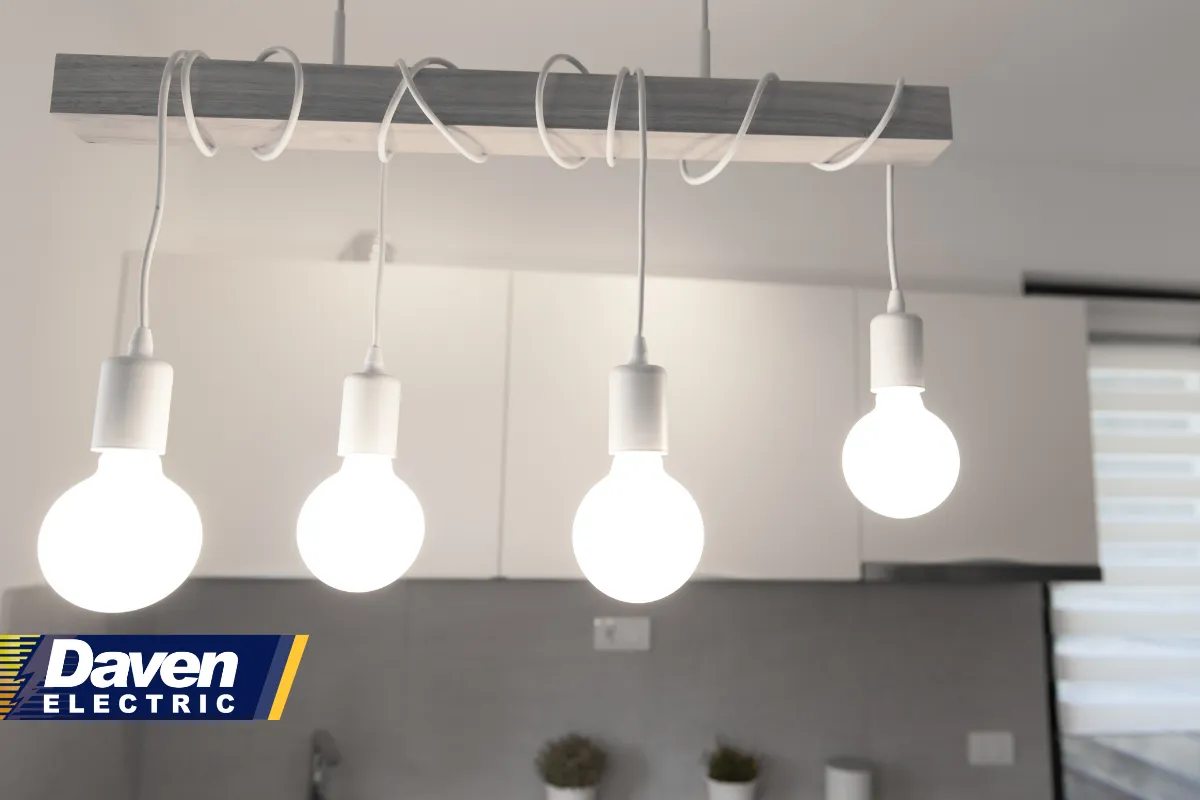
Persistent issues with LED lighting are often symptoms of deeper electrical faults, not just a bad bulb. Before you buy a replacement at the hardware store, consider whether the problem is behind the wall rather than in the socket. An electrician can fix wiring issues causing flickering lights and can troubleshoot issues like flickering or buzzing LED lights to find the root cause.
Flickering That Will Not Stop
Flickering LEDs may indicate loose wiring or faulty dimmers. A loose connection inside a junction box, a wire nut that was never tightened properly, or an aging dimmer switch designed for incandescent loads can all trigger visible flicker. LED drivers require stable input; when voltage at the fixture drops below roughly 105V AC because of undersized wire, long cable runs, or a weak connection, the driver cycles on and off. Only a licensed professional should open a junction box to inspect and repair these connections.
Unexpected Dimming
LEDs that dim without warning often share a circuit with high-demand appliances. When an air conditioner compressor kicks on and pulls a large inrush current, voltage sags briefly across the branch circuit. LEDs respond to that sag far more visibly than incandescent bulbs. Older wiring may pose compatibility issues with modern LED setups, and Brooklyn homes may have different wiring infrastructures based on their age and style. A pre-war brownstone with cloth-insulated wiring handles voltage differently than a 2010 condo build with Romex.
Buzzing or Humming
Buzzing sounds from LEDs may indicate incompatible dimmer switches. Many older dimmers use leading-edge (TRIAC) technology tuned for 60W to 600W incandescent loads. An LED fixture drawing 9W on that same dimmer sits far below the dimmer’s minimum threshold, producing audible hum and ripple current that stresses the driver. If the buzzing persists, the risk of overheating increases. Brooklyn buildings often have unique electrical quirks requiring professional evaluation, so a quick diagnostic visit is worth the cost.
Overheated Fixtures and Can Lights
Recessed lighting installed in insulated ceilings must use IC-rated (Insulation Contact) housings. If the wrong housing type is in place, insulation presses against the can and traps heat. The fixture’s thermal protector may trip repeatedly, or the driver may degrade. The NYC Energy Conservation Code requires that recessed luminaires in insulated ceilings be IC-rated, sealed, and tested to leak less than 2.0 cfm of air per ASTM E283. Incorrect wattage can lead to overheating and LED burnout, especially when an old incandescent-era can is retrofitted with a high-output LED module without verifying the housing rating.
Frequent LED Burnouts
LEDs should last for years; frequent burnouts indicate issues. Quality LED products carry ratings between 15,000 and 50,000 hours. If you are replacing bulbs every few months, suspect power surges, a loose neutral, or poor grounding. Overloaded circuits can cause LED lights to flicker or fail, and unstable mains voltage accelerates driver stress. A 2025 technical bulletin from the NIH Office of Research Facilities confirmed that LED drivers respond non-linearly to voltage variation, meaning even minor instability causes disproportionate wear.
When to Call for Emergency Help
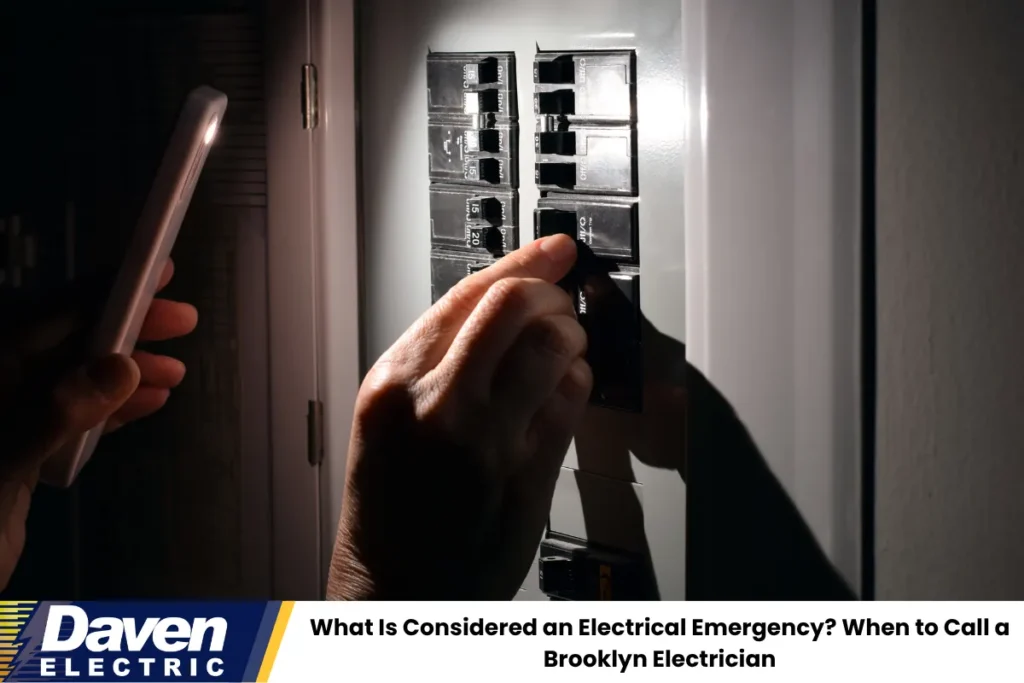
An emergency electrician may be necessary if breakers trip repeatedly, you smell burning near a switch or fixture, or you see visible arcing. Lights that flicker every time a major appliance starts can point to a shared neutral or an overloaded circuit that needs immediate attention. Do not reset a tripping breaker more than once; leave the circuit off and call for same-day service.
DIY LED Tasks vs. Projects That Require a Licensed Pro
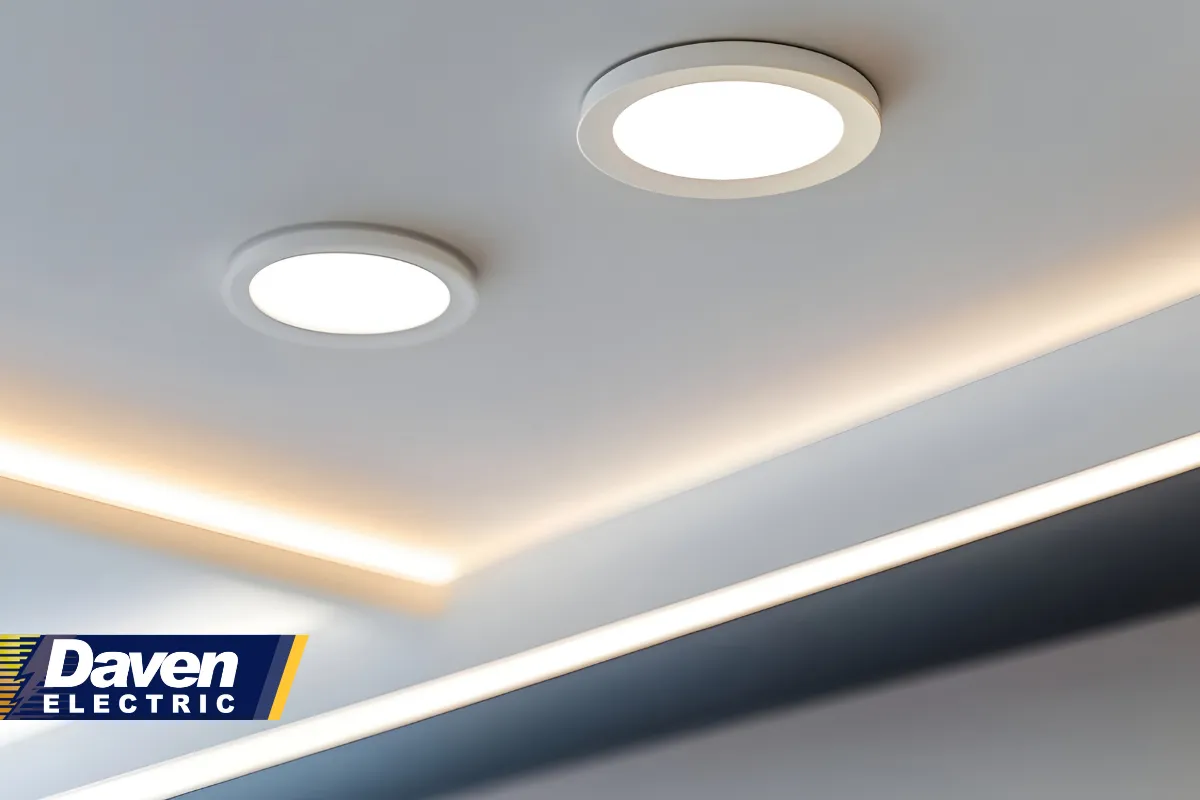
Some LED projects are safe for careful homeowners. Others must legally and practically be handled by a licensed electrical contractor in Brooklyn. Here is how to tell them apart.
Safe DIY Examples
- Replacing screw-in bulbs of the same shape, size, and voltage
- Installing plug-in LED floor lamps or table lamps
- Swapping battery-powered puck lights in closets or pantries
- Using adhesive LED strips with a factory UL-listed power adapter that plugs into an existing outlet
Replacing existing fixtures at existing outlets may not require a licensed electrician, provided the wiring is in good condition and the new fixture matches the junction box rating.
Borderline Tasks
Replacing an existing ceiling fixture with an LED fixture on the same box is a common homeowner project. It can be done safely if you shut off the breaker (not just the switch), verify the circuit is dead with a non-contact voltage tester, and confirm the junction box supports the weight of the new fixture. If the box is old, the wires are brittle, or you see aluminum conductors, stop and call a pro.
Projects That Belong to a Professional
- New recessed lighting layouts; installing recessed lighting usually requires cutting into ceilings, locating joists, and running new cable
- Adding LED fixtures where no junction box exists
- Running new wire through walls, ceilings, or fire-rated assemblies
- Outdoor LED lighting, motion-sensor floodlights, and landscape lighting tied into building wiring; these need weatherproof boxes, GFCI protection, and corrosion-resistant fittings
- Electricians can install LED recessed lighting and strip lights in concealed locations while maintaining required junction box access
Code-Sensitive Spaces
Bathrooms, kitchens, and basements require GFCI protection on circuits serving lighting and receptacles. Bedrooms must have AFCI protection on new circuits under current NYC code. Fixtures above showers and tubs carry specific listing requirements (damp or wet rated) and clearance rules. These are not areas to learn by trial and error.
Business owners installing LED fixtures in commercial spaces should always use a licensed electrical contractor. Occupancy certificates, insurance policies, and fire inspections all depend on code-compliant electrical work performed by a qualified professional. With 704 five-star electricians available in Brooklyn, NY, finding one with the right experience and reviews is straightforward.
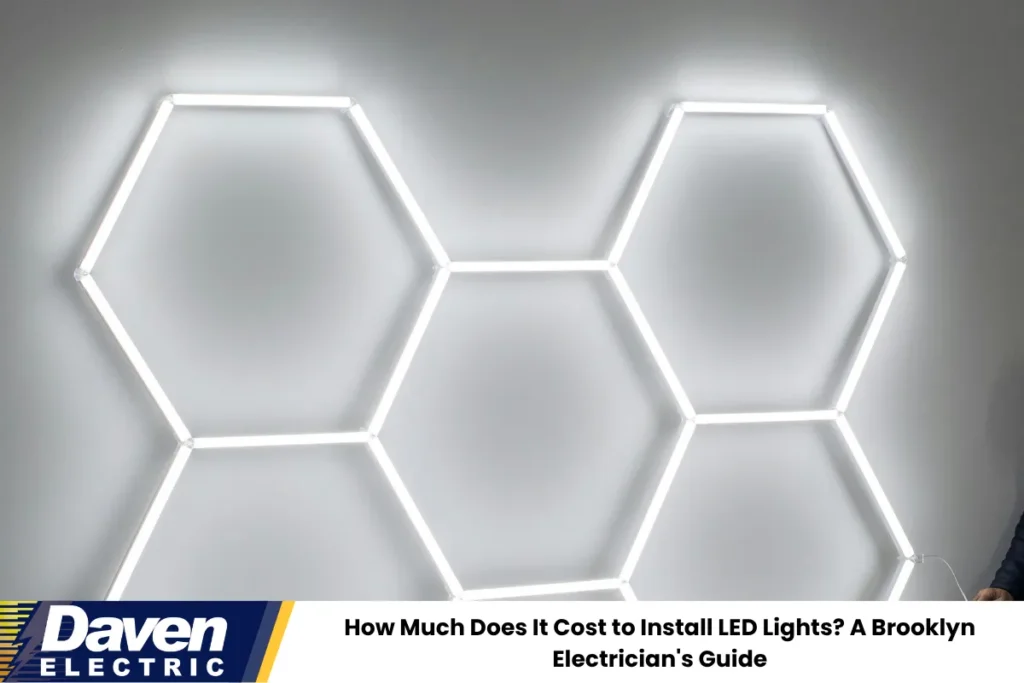
Read How Much Does It Cost to Install LED Lights? A Brooklyn Electrician’s Guide
LED Installation Mistakes That Make a Brooklyn Electrician Essential
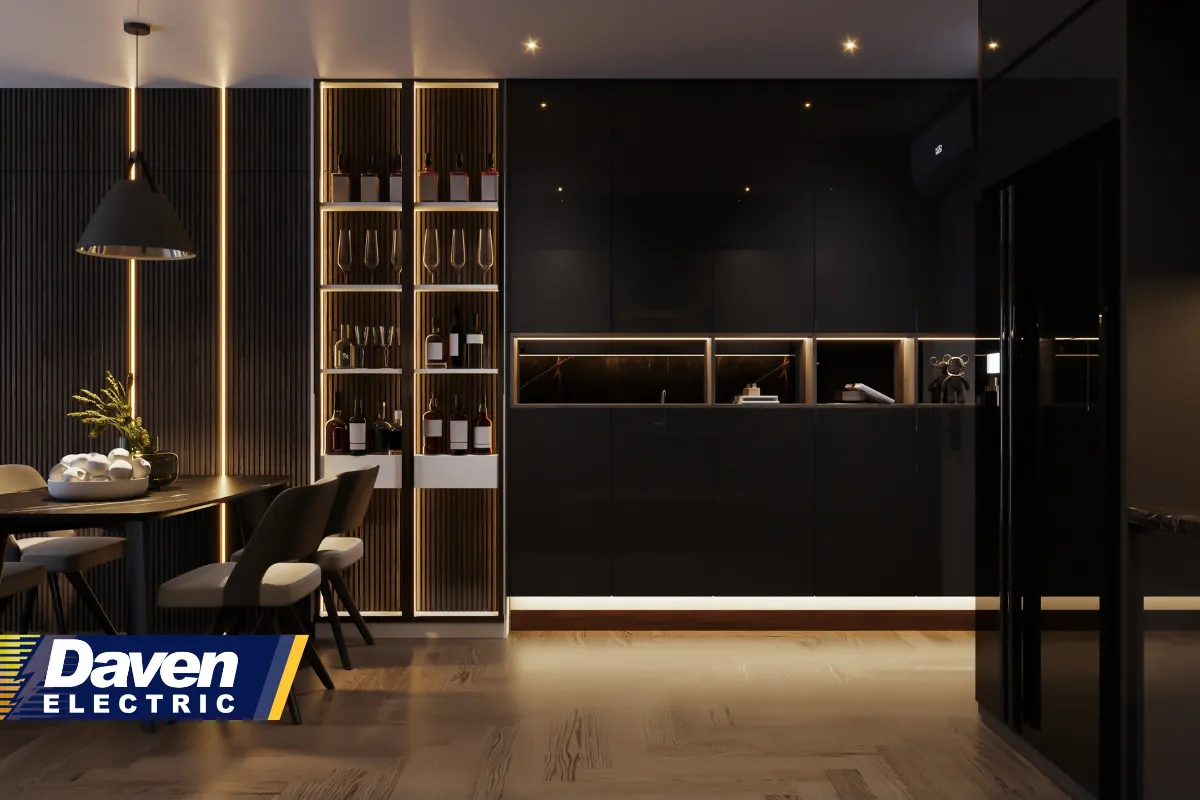
Small errors in LED installation produce flickering, premature failure, and safety risks that outweigh any DIY savings. Improper installation can lead to electrical hazards, and improper LED installation can lead to flickering or safety hazards. Here are the mistakes that come up most often.
Wrong Wattage and Driver Selection
Proper LED lighting installations require specific low-voltage drivers matched to the fixture’s current and voltage needs. Using an incompatible driver, or stuffing a high-output LED retrofit into an old recessed can that was designed for open-air incandescent cooling, traps heat inside the housing. The driver’s electrolytic capacitors degrade faster at elevated temperatures, cutting fixture life from years to months. If insulation surrounds a non-IC-rated housing, the risk compounds.
Incorrect Wiring
Reversed hot and neutral leads prevent GFCI devices from tripping correctly and create shock risk. Missing ground connections eliminate the fault-detection path that protects you. In older Brooklyn housing stock, back-stabbed receptacles (where wire is pushed into a spring clip rather than wrapped around a screw terminal) loosen over time and create high-resistance connections that arc. Overloaded or shared neutrals across circuits cause voltage instability that damages LED drivers.
Improper Spacing and Layout
Electricians ensure proper spacing for LED lighting to avoid dark spots. Professionals calculate spacing based on ceiling height, beam angle, and room function. A 6-inch recessed downlight with a 40-degree beam spread at an 8-foot ceiling covers roughly a 5-foot diameter circle on the floor. Place them too far apart and you get dark zones between pools of light; too close and you waste money and create glare. LED strip lights under cabinets need even spacing and, for runs over 16 feet on a 12V system, power injection at the midpoint or far end to prevent color shift and dimming.
LED Strip Light Mistakes
According to LED industry data, approximately 95% of flickering in LED strip installations traces back to undersized power supplies or voltage drop over long runs. Daisy-chaining too many feet of strip on a single driver, or hiding a non-listed adapter inside a wall cavity, violates code and creates heat buildup. A qualified installer sizes the driver with 20% to 30% headroom above the strip’s total wattage.
Circuit Overloading
Even efficient LEDs can push a circuit past its limit. A 15-amp branch circuit already serving several receptacles, a window AC unit, and a microwave has little room for a dozen new recessed fixtures and their drivers. A residential electrician can inspect your panel, calculate loads per NEC Article 220 (as modified by NYC code), and propose new circuits or subpanels when you plan a whole-home LED upgrade.
How a Brooklyn Electrician Designs and Installs LED Lighting
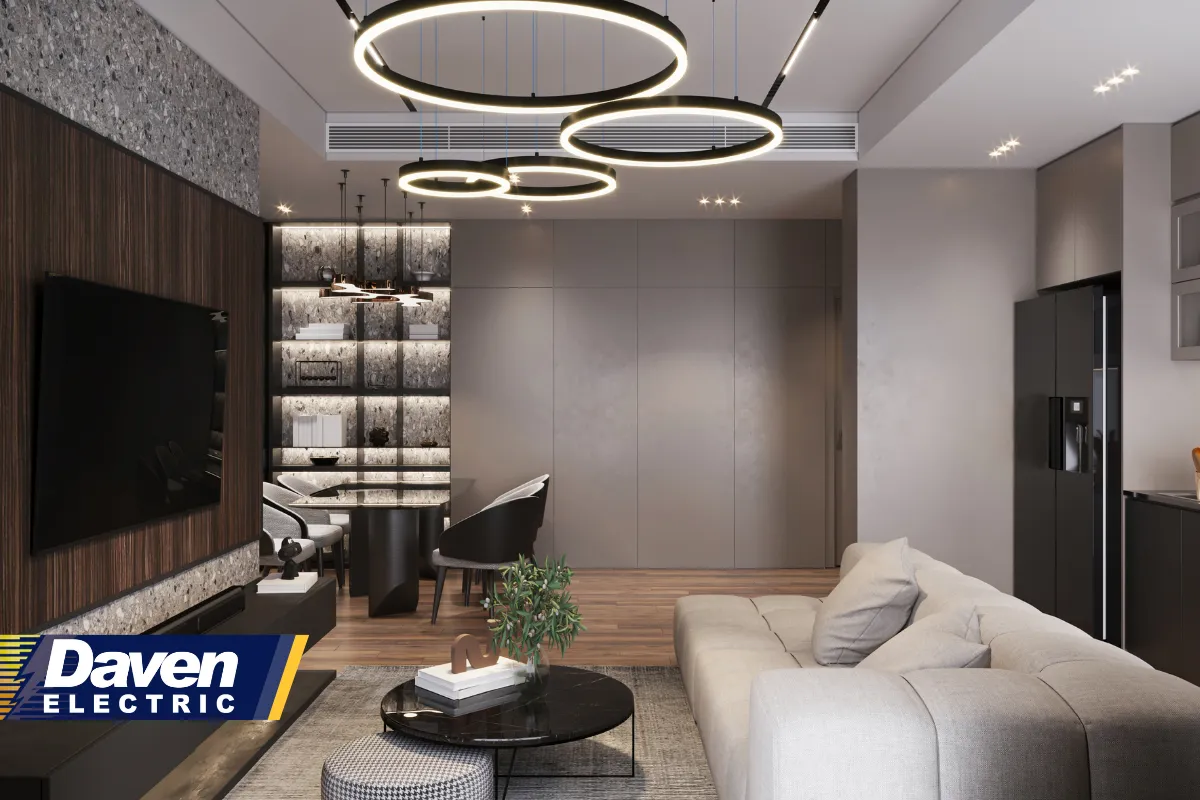
A licensed professional approaches LED planning differently from a weekend DIY project. The focus is on safety, code compliance, and long-term reliability rather than speed. Brooklyn electricians are familiar with local electrical codes and regulations, and electricians should have experience with LED installations specific to the housing types in the area.
Home Assessment
The job starts at the panel. Is the service 100A or 200A? Are there spare breaker slots? Is the wiring copper or aluminum? From there, the electrician traces branch circuits serving the rooms where new lighting will go, checking wire gauge, insulation condition, and junction box integrity. In a pre-war Brooklyn home, this step alone can reveal cloth-insulated wiring, missing grounds, or circuits that have been tapped repeatedly over decades without proper load calculation.
Layout Planning
For recessed lighting, surface fixtures, and strip lights, the layout depends on room size, ceiling height, and purpose. Task lighting over a kitchen counter needs tighter fixture spacing and higher color rendering (CRI 90 or above) than ambient lighting in a hallway (CRI 80 is acceptable). Beam spread, color temperature (2700K for warm residential spaces, 4000K for workspaces), and fixture style all factor into the plan. Electricians ensure compliance with electrical codes during installation, including the NYC Energy Conservation Code’s Lighting Power Density thresholds that cap watts per square foot.
Dimmer and Control Selection
Advanced LED features like smart controls should be properly wired for optimal function. Many modern smart switches and dimmers require a neutral wire in the switch box. Older Brooklyn homes often lack a neutral at the switch location, meaning an electrician must add or reroute wiring. The dimmer itself must be rated for LED loads and listed for the number of fixtures on the circuit. Occupancy sensors, daylight dimming, and scene controllers add complexity that benefits from professional planning.
Permits and Inspections
The 2025 NYC Electrical Code, effective December 21, 2025, governs all electrical work in the city. Under NYC Administrative Code section 28-105.1, a permit is required to install, alter, or repair electrical wiring and equipment unless the work qualifies as exempt (like a simple bulb replacement). The electrician files through DOB NOW Build, schedules inspections, and ensures the finished installation passes review. Skipping this process can result in DOB penalties, complications during property sales, and denied insurance claims after a fire.
Inspection and Testing
Before signing off, the electrician tests voltage under load at the farthest fixture on the circuit, verifies ground continuity, and confirms that every switch, dimmer, and LED driver functions correctly. If the project includes recessed lighting in insulated ceilings, the seal between housing and drywall is checked to meet the airtightness standard. Check online reviews before hiring an electrician to find professionals who document this level of thoroughness, and always request a detailed estimate before work begins so you know exactly what each line item covers.
For homes, work is scheduled around family routines during normal business hours. For offices and retail spaces, electrical service is often completed early morning or evenings to reduce disruption to the day’s operations.
Brooklyn Electrician; Daven Electric Corp.

We are Daven Electric Corp., a licensed and insured electrician serving Brooklyn, New York. Our team designs and installs LED fixtures for apartments, brownstones, condos, and commercial suites, prioritizing safety, clean workmanship, and full compliance with New York City electrical standards. We handle recessed lighting layouts, panel upgrades, dimmer installations, and complete LED conversions for every room in your home or office space.
If your lights are flickering, buzzing, or dimming without explanation, we troubleshoot the problem and provide a lasting repair. We offer both scheduled visits and rapid response for urgent electrical issues related to lighting and wiring.
Call us today at (212) 390-1106 or fill out our online contact form to request an estimate. Whether you need a simple fixture replacement or a full LED upgrade, Daven Electric Corp. is ready to improve your space with professional planning and clear communication.
Frequently Asked Questions
Can I mix different LED brands and color temperatures on the same lighting circuit?
Electrically, different LED brands can share the same circuit without issues. The concern is visual consistency. Mixing color temperatures, such as a 2700K warm white alongside a 4000K neutral white, creates uneven lighting that looks disjointed, especially in open-concept rooms where you see multiple fixtures at once. Some lower-quality LEDs also react differently to dimmers than premium models, so pairing them on the same dimmer switch can produce flicker in one bulb while the other operates smoothly. For any space where appearance matters, choose one reputable brand and a single color temperature. If you are planning a renovation or whole-home LED project, a professional can help standardize selections across every room so the look and performance stay consistent from fixture to fixture.
How long should quality LED lights last in a Brooklyn home?
Many residential LED products carry ratings between 15,000 and 50,000 hours. At four to five hours of daily use, a 25,000-hour LED could last roughly 14 years. Real-world results depend on the stability of the electrical system feeding the fixture. Constant on/off cycling wears on drivers, heat buildup inside recessed housings accelerates component aging, and voltage fluctuations from aging wiring or a shared transformer shorten lifespan. If LEDs in your home fail within months rather than years, the problem is likely power quality, loose connections, or a substandard product rather than normal wear. Having an electrician check the circuits serving that area can identify whether the wiring, neutral, or grounding needs repair before you spend more money on replacement bulbs.
Do I need special electrical wiring for smart LED bulbs and smart switches?
Most smart LED bulbs screw into standard sockets and connect to your Wi-Fi network without any wiring changes. Smart switches, on the other hand, can have additional requirements. Many modern smart switches and smart dimmers need a neutral wire inside the switch box to power their internal electronics. Older Brooklyn homes, particularly pre-war construction, often lack a neutral at switch locations because the original wiring ran only hot and switched-hot conductors to the box. A residential electrician can add or reroute the neutral safely, and can verify that smart controls will not overload the low-voltage driver or conflict with an existing dimmer on the same circuit. Before purchasing a large number of smart devices, consult a professional to confirm compatibility with your current wiring so you avoid costly returns or rework.
Are there special code rules for installing LED lights in rental apartments?
Tenants in most multi-unit buildings can change bulbs and use plug-in lamps without any approval. Hardwired modifications are a different matter. Permanent changes, such as adding recessed lighting, relocating a fixture, or running new wire, typically require written approval from building management and must follow New York City electrical code. The work itself must be performed by a licensed electrical contractor, and a permit may be needed depending on scope. Unauthorized wiring changes create safety risks, liability concerns during inspections, and potential lease violations. If you want to upgrade the lighting in your rental, contact your property manager first. They can coordinate with a licensed professional to complete the job correctly and keep the building’s electrical records up to date.
What should I do if my breaker trips every time I turn on new LED lights?
A breaker that trips repeatedly is a clear safety signal. Do not tape it in place, hold it, or swap in a higher-amp breaker. Potential causes include a short circuit in the new fixture or its wiring, a loose connection creating intermittent contact, a mislabeled breaker that actually serves more load than you realize, or a circuit already near capacity from other devices. Turn off the affected breaker and leave the lights off until a licensed electrician can diagnose the problem. Repeatedly resetting a tripping breaker can overheat the wiring and the breaker itself, increasing fire risk. A professional will test the circuit, isolate the fault, and either repair the connection or recommend a dedicated circuit for the new lighting to ensure the installation is safe going forward.
Disclaimer
Disclaimer: This article provides general educational information about LED lighting installation in Brooklyn and does not substitute for individualized code, safety, or legal advice. Always consult a licensed electrician before performing electrical work in your home or business.
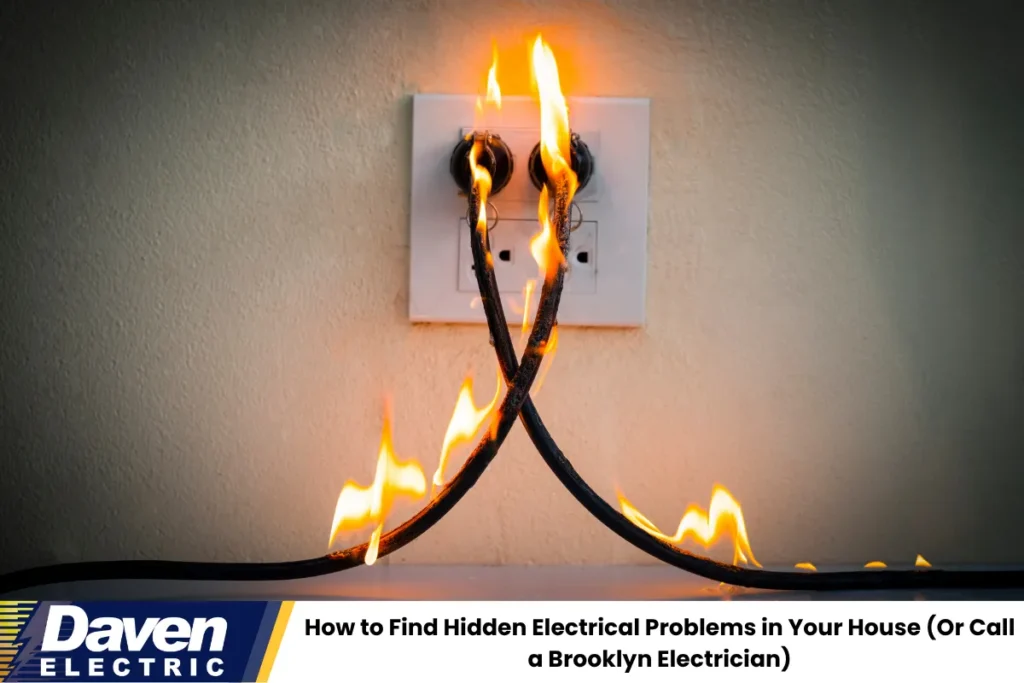
Read How to Find Hidden Electrical Problems in Your House (Or Call a Brooklyn Electrician)